I owned the business side of a two-sided launch
XTM partnered with CloudMD to launch Today Wellness, virtual mental-health and wellness services, sold two ways at once: individual members opt in through the app, and business clients offer it to their whole staff. As the sole designer for the B2B platforms, I owned the Client and Internal Portals. Three constraints shaped the B2B model:
- All-or-nothing. A client pays for all its associated users; it can't offer the product to individuals selectively.
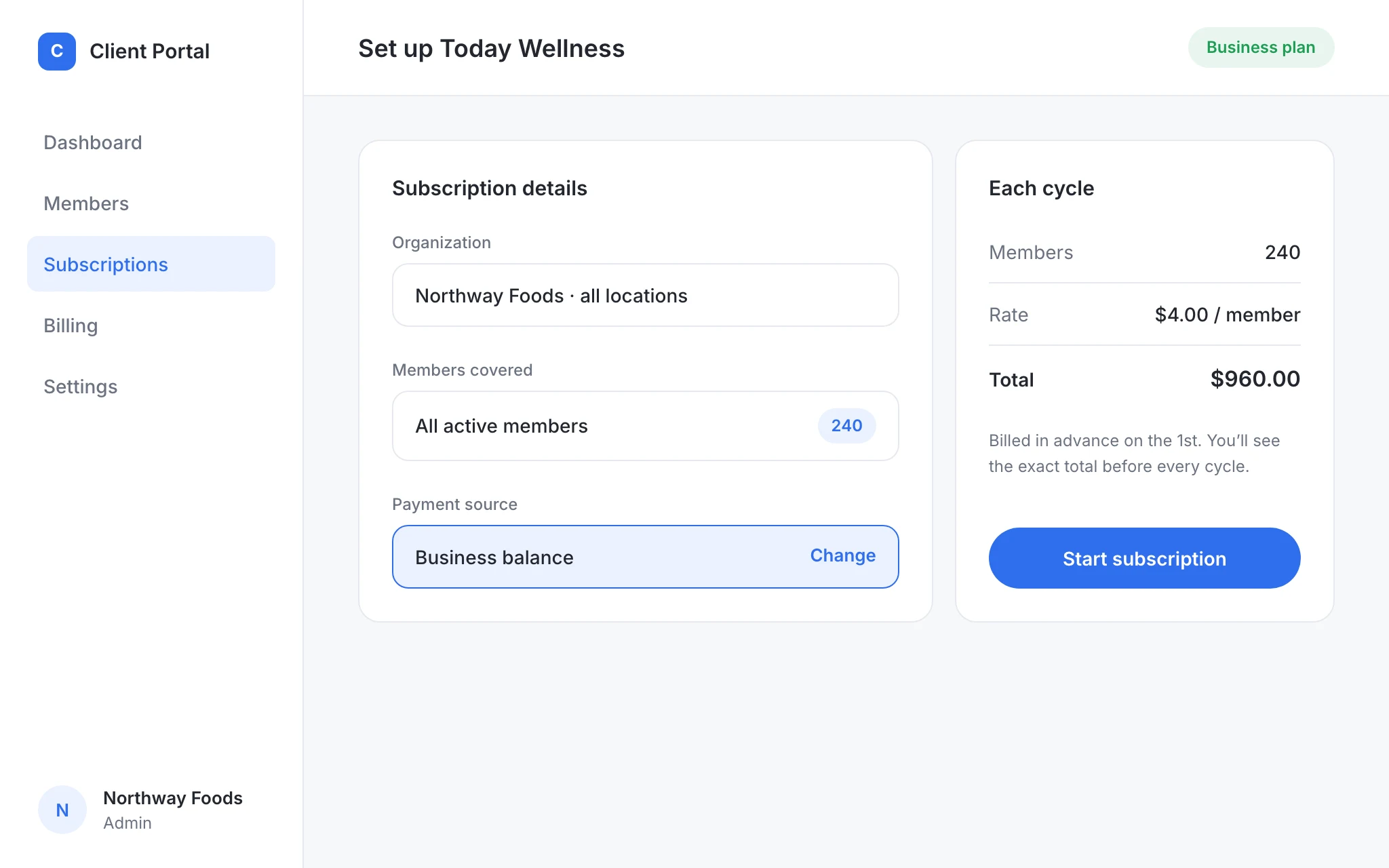
- Visibility. Clients needed to see member counts and total costs up front, before each cycle billed.
- Partner billing. Our billing had to line up with our partner's cycle for accurate bookkeeping.
I mapped the money before designing a screen
I started Today Wellness with a map of how money moves between members, business clients, XTM, and CloudMD across each billing cycle.
Members (B2C)
Business clients (B2B)
The two money paths, redrawn in the abstract. The detailed diagram, with its billing-cycle mechanics, stays under NDA.
Two billing conflicts, settled before build
Both conflicts hid in the funds flow's edge cases, the paid B2B paths finance would have to reconcile every cycle. I framed each one as a business decision with a cost attached, not a design preference, and walked finance and product to a call on both.
Mid-cycle additions vs. fixed billing dates. Adding users mid-cycle clashed with the partner's fixed billing dates: prorate them, or make them wait. With finance and product we chose to wait, because prorating created financial edge cases the business wasn't willing to carry.
Multiple subscriptions, multiple tax jurisdictions. Bundling subscriptions looked cleaner for clients, until wireframe prototypes revealed bundling wouldn't survive the tax implications of operating across locations. The call: clients create a new subscription each time they opt in.
Money screens that show the math
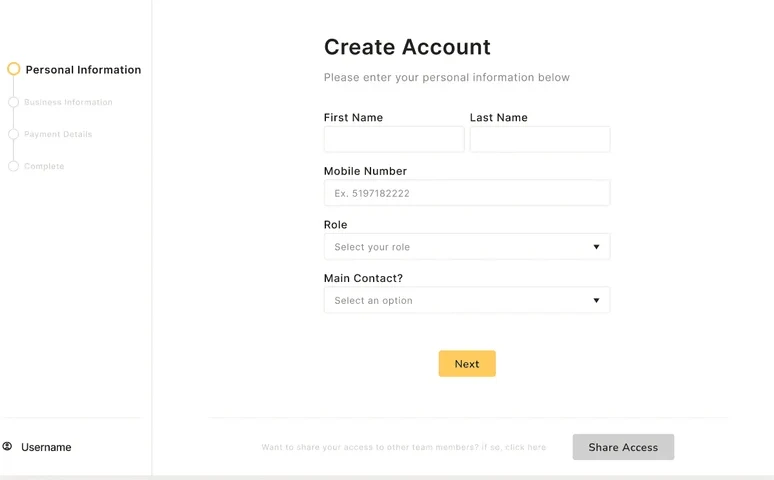
With the billing model settled, I designed the full client-portal journey lo-fi first, then carried it to the hi-fi flows handed to engineering.
Handed off on a billing model finance signed off
The full journey handed off as interactive prototypes and documentation, on a billing model finance had already signed off: opt-in, subscription with live totals, and cancellation, across the two portals I owned.
The full story
Every artifact, decision, and iteration lives in the deck.
Opens in Figma, shared under the same NDA terms as this page
View the full deck · 13 slides · Figma